Penerapan Metode Seven Tools dan SWOT untuk Analisis Pengendalian Kualitas Wheelset pada Proses Overhaul PT. XYZ
DOI:
https://doi.org/10.30737/jatiunik.v9i2.7657Keywords:
wheelset, Seven Tools, SWOT, Quality Control, overhaulAbstract
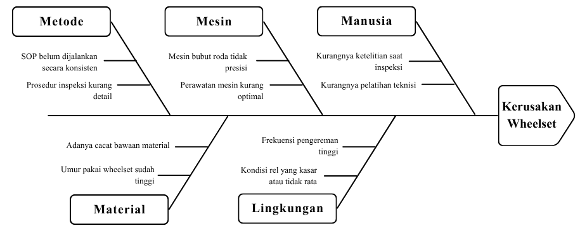
Wheelsets are vital components in railway systems that function to support loads, maintain stability, and transmit motion forces during operation. However, the high level of wheelset defects during the overhaul process indicates the need for a more effective and sustainable quality control system. This study aims to analyze the dominant defect types and formulate improvement strategies for wheelset quality at PT XYZ using the Seven Tools method and SWOT analysis. The research methodology was conducted through the collection of wheelset inspection data from January to December 2024, which were then analyzed using check sheets, histograms, Pareto diagrams, control charts, scatter diagrams, and fishbone diagrams. The results showed that wheel wear was the dominant defect at 61%, followed by cracks at 20% and flat spots at 19%. These findings indicate that operational factors, machine maintenance, and SOP implementation are the main causes of defects. Improvement strategies focused on enhancing technician training, optimizing maintenance activities, and strengthening operational supervision. This study contributes to the development of a more systematic wheelset quality control approach to support railway operational reliability and safety.
References
[1] R. Lukodono, Pratikto, and R. Soenoko, “Analisis Penerapan Metode RCM Dan MVSM Untuk Meningkatkan Keandalan Pada Sistem Maintenance (Studi Kasus PG. X),” Rekayasa Mesin, 2013.
[2] M. Farsi, B. Namoano, A. N. Sonmez, S. Addepalli, and J. A. Erkoyuncu, “A Robust Design for Lifecycle Cost with Reliability Analysis Integration,” Procedia CIRP, vol. 119, pp. 248–253, 2023, doi: 10.1016/j.procir.2023.05.004.
[3] H. Budi Harja, A. Riyanto Putra, and W. Kresnandi, “Perencanaan Strategi Preventive Maintenance Pada Mesin Shot Blasting di PT. ABC dengan Klasifikasi ISMO,” J. Teknol. dan Rekayasa Manufaktur, vol. 3, no. 1, pp. 1–12, 2021, doi: 10.48182/jtrm.v3i1.76.
[4] J. Antony, O. McDermott, and M. Sony, “Revisiting Ishikawa ’ s Original Seven Basic Tools of Quality Control : A Global Study and Some New Insights,” 2021, doi: 10.1109/TEM.2021.3095245.
[5] A. Sirisopha and J. Srithorn, “Reducing Waste in the Crankshaft Manufacturing Process by Using Seven QC Tools,” pp. 978–981, 2022, doi: 10.18178/wcse.2022.04.11.
[6] S. L. Fitriani, G. F. H. Belia, and S. W. Annisa, “Pengendalian Produk Cacat Menggunakan Metode Seven Tools untuk Meningkatkan Produktivitas di PT. Amanah Insanillahiah Fitriani,” vol. 10, no. 2, pp. 774–778, 2023.
[7] M. W. Syifa Aunillah, M. D. Kurniawan, and H. Hidayat, “ANALISIS PENGENDALIAN KUALITAS PRODUKSI BATU KUMBUNG MENGGUNAKAN METODE SEVEN TOOLS (Studi Kasus : CV. Salsabilah Group),” Sigma Tek., vol. 5, no. 1, pp. 030–038, 2022, doi: 10.33373/sigmateknika.v5i1.4202.
[8] S. Supmana and R. Prasetyo, “Analisis Pengendalian Kualitas dengan Metode Seven Tools di Pt. XYZ,” J. Optim., vol. 08, no. 02, pp. 1–75, 2024.
[9] A. Chiarini, “Industry 4 . 0 technologies in the manufacturing sector : Are we sure they are all relevant for environmental performance ?,” no. March, pp. 3194–3207, 2021, doi: 10.1002/bse.2797.
[10] M. R. Rosyidi, N. Izzah, and A. Rufaidah, “Pengendalian Kualitas Produk Songkok untuk Meminimalkan Cacat Produksi Menggunakan Metode Seven Tools,” JATI UNIK J. Ilm. Tek. dan Manaj. Ind., vol. 7, no. 1, pp. 26–39, 2023, doi: 10.30737/jatiunik.v7i1.4269.
[11] K. Gopala Chandra and I. Dwi Nurul, “Analisis Pengendalian Kualitas Produk Jok Dengan Metode Seven Tools Untuk Mengurangi Kecacatan Produk Di PT ABC,” vol. 8, no. 1, 2026.
[12] I. K. Dartawan, “Analisis Pengendalian Kualitas Produk Dengan Metode Seven Tools Dan Kaizen Pada PT Sinar Semesta,” vol. 18, pp. 29–38, 2023.
[13] H. Kerras, S. Bautista, D. Santos, and P. Perea, “Closing the Digital Gender Gap among Foreign University Students : The Challenges Ahead,” pp. 1–28, 2022.
[14] A. S. Abubakar, N. A. Haron, A. Hizami, and L. T. Hua, “Jurnal Teknologi EXPLORING QUALITY DIMENSIONS FROM A CONSTRUCTION PERSPECTIVE : A LITERATURE,” vol. 4, pp. 133–141, 2023.
[15] S. Kamal and Sugiyono, “Analisis Pengendalian Kualitas Produk Kantong Semen menggunakan Metode Seven Tolls (7QC) pada PT. Holcim Indonesia, Tbk,” J. Ilm. Manaj. Bisnis, vol. 3, no. 1, pp. 122–134, 2019.
[16] D. Hamdani, “Pengendalian Kualitas Dengan Menggunakan Metode Seven Tools Pada PT X,” J. Ekon. Manaj. dan Perbank. (Journal Econ. Manag. Banking), vol. 6, no. 3, p. 139, 2022, doi: 10.35384/jemp.v6i3.237.
[17] A. A. Faris and N. G. Iwan, “Penerapan Metode Seven Tools pada Pengendalian Kualitas Produk Cacat di PT. XYZ,” Ind. Inov. - J. Tek. Ind. ITN Malang, vol. VIII, no. 2, pp. 5970–5978, 2025.
[18] A. P. Dewi and W. Sudarwati, “PROSES PENDIDIKAN PADA PROGRAM STUDI TEKNIK INDUSTRI UNIVERSITAS MUHAMMADIYAH JAKARTA,” vol. 7, no. 1, pp. 1–12, 2020.
[19] E. Yoniv, “Analisa Pengendalian Kualitas untuk Mengurangi Jumlah Cacat pada Kemasan Produk Gula Pasir PG Kremboong dengan Metode Seven Tools,” Pros. SENASTITAN, vol. 1, pp. 349–357, 2021.
[20] A. Firdaus, P. Vitasari, and E. Adriantantri, “PENGENDALIAN KUALITAS PRODUK CACAT MENGGUNAKAN METODE SEVEN TOOLS DI CV BERKAT ANUGRAH,” vol. 6, no. 2, pp. 157–164, 2023.
[21] A. A. Abidin, W. Wahyudin, R. Fitriani, and F. Astuti, “Pengendalian Kualitas Produk Roti dengan Metode Seven Tools di UMKM Anni Bakery and Cake,” Performa Media Ilm. Tek. Ind., vol. 21, no. 1, p. 52, 2022, doi: 10.20961/performa.21.1.53700.
[22] L. Permono, S. T. Salmia, R. Septiari, ) Program, and S. T. Industri, “Penerapan Metode Seven Tools Dan New Seven Tools Untuk Pengendalian Kualitas Produk (Studi Kasus Pabrik Gula Kebon Agung Malang),” J. Mhs. Tek. Ind., vol. 5, no. 1, pp. 58–65, 2022.
[23] B. Nurjaman, A. I. Waluya, and W. T. Sasmi, “Quality Control of Head Cylinder Products Using the Seven Tools Approach at PT Otomotif Indonesia Total Defects Period July to December,” vol. 10, no. 2, pp. 335–344, 2024.
[24] I Komang Dartawan and Widya Setiafindari, “Pengendalian Kualitas Menggunakan Metode Seven Tools Dan Kaizen Produk Polypropylene Pada PT KMPI,” J. Tek. Mesin, Ind. Elektro dan Inform., vol. 2, no. 2, pp. 209–221, 2023, doi: 10.55606/jtmei.v2i2.1861.
[25] R. Anindya and H. Dene, “PENERAPAN METODE SEVEN TOOLS PADA PENGENDALIAN,” pp. 213–220, 2025.
[26] Y. A. Kusuma, H. A. Khoiri, and F. D. Aryaningtyas, “Penilaian Risiko Kualitas Pada Proses Produksi Kain Di Pt. Xyz,” J. Ind. Eng. Technol., vol. 4, no. 1, pp. 48–53, 2023, doi: 10.24176/jointech.v4i1.10844.
[27] D. Indraswati, A. Widodo, and U. Mataram, “Implementasi manajemen pengendalian mutu sekolah,” 2020.
[28] R. Kesuma and S. M. Khoiroh, “Continuous Improvement dengan PDCA pada Produksi Sabun Batang di PT XYZ,” pp. 118–127, 1945.
Downloads
Published
Issue
Section
License
Copyright (c) 2026 Muhamad Iqbal Ramadhan, Ratih Setyaningrum

This work is licensed under a Creative Commons Attribution-ShareAlike 4.0 International License.
Information regarding Copyright and Licensing at JATI UNIK as follows:
- Licensed Use of Non - Commercial Articles will be governed by the Creative Commons Attribution license, which is featured on the Creative Commons Attribution Non-Commercial Share A Like 4.0 International License.
- The author guarantees that the articles published through JATI UNIK are original and do not contain statements that violate the law do not violate others' rights are subject to copyright, which is held exclusively by the author and free from the rights of third parties. The author is allowed to quote from various sources used for research and not to harm any party.
- JATI UNIK disseminates articles published with the rules set by Creative Commons. UNIK JATI license allows users to copy, distribute, display, and work for non-commercial purposes. Users also need to connect authors and JATI UNIK with the distribution of articles in journals.
- The Author rights, namely copyrights, ownership rights, patents, rights to use the substance of articles in the future, rights to reproduce articles for personal purposes and not to be traded, rights to conduct personal archives, rights to contract used for the non-exclusive distribution of articles published in the form a book and acknowledge the initial publication of the article originating from JATI UNIK.
- Suppose articles published by the author through JATI UNIK are compiled with other authors. In that case, it is necessary to create a form containing the authority of all authors involved in the article's production by including the agreement agreed upon by all authors in the article.
- The next point is, the agreement can be terminated if the author or JATI UNIK violates the agreement and cannot make repairs to the customer within a maximum of 2 months after being given information asking for the violation to be corrected. If there is no violation of the agreement, the license will automatically terminate and affect UNIQUE JATI UNIK.
- Regarding royalties, so far, if it is following applicable legal regulations, the author will waive his right to collect royalties on articles that have been licensed by JATI UNIK.
- In publishing the article, the editorial process is successful. JATI UNIK will continue it. JATI UNIK has the right to adjust articles related to punctuation, spelling, capital letters, references used, and usage adapted to JATI UNIK. The author acknowledges that the article can be published and accessed free of charge by the public.